The day I retired my car was the same day as another important event in my life.
The day I stopped driving was my first day living in Seattle.
Before this, I was commuting from the south sound and driving by myself up and down the major I-5 freeway.
Many of you can relate to commuting in a car on the freeway at some point in your life. If the distance needed is 15 miles, regular traffic could make it take more than an hour.
If a person physically needs or wants to be in a specific place often and regularly, it makes sense to settle a home nearby.
I moved to Seattle so that I could walk to work.
I imagined what life would be like if I could live on the top floor of a city building which had a studio gym that I owned beneath it.
Being able to always and predictably access my workplace was greatly appealing as I believed it could make me more valuable to the team.
However, I recall depressing summer evenings walking through Capitol Hill where it was tough to see people having enticing happy hours outside as I was heading to go be inside an orange room.
Once I was at work though, I would feel better because it is in my blood to serve people and I enjoy it even though I wish I was more selfless.
Walking through an urban village is far more interesting than walking across a long suburban road.
Plus, it’s nice when the cars around you aren’t traveling fast.
My commute on foot between 2014 and the beginning of the Pandemic was just under a mile and predictably took 15 minutes or less. It was great even though I quickly learned it’s better to avoid commuting on Broadway.
I’ll tell you why later.
Pedestrians enjoy a sense of freedom.
While the limitations exist of not owning a personal car, it is also less of a burden to not have to deal with the maintenance, safety, and financial upkeep of vehicle ownership.
Not to mention, you never have to worry about parking or having your car stolen or vandalized.
There are dangerous people on the streets.
I noticed that a lot of people in Seattle are pretty good at avoiding eye contact on the streets. Don’t get me wrong, there are quite a few friendly people in healthy, normal contexts. However, there are undeniably some people who are burdened with mental health and addiction which can lead to threatening behavior.
There are moments of significant harassment that I have endured during my time as a pedestrian.
I feel strongly uncomfortable so that I marinate in the painful emotions in order to realize what it would take for the situation to go differently. I replay the situation in my head as if it was a memory of a more positive account.
One of the main strategies to prevent street harassment from mentally unwell people is to avoid eye contact.
Also, avoid Broadway if you want a peaceful commute, or go to Broadway if you want an interesting commute. I almost always took the parallel streets because they were safer and quicker.
Having a functional bag or backpack is not always the coolest look, but it can be a necessity for many pedestrians.
I often wore a backpack even though I have been conscious of my street look.
It’s okay during the day, but during nightlife I have been told by partners to lose the bag as I would appear sexier in their company sans backpack.
Some bags look cool, but most probably don’t.
Some people do a very intense stare.
I’ve definitely had moments on my walking commute where I catch a person staring at me. Nine times out of ten, the person looks away and maybe does or doesn’t look back. But on the tenth stare, it can be particularly intense.
Maybe I tell myself that I should be grateful people are paying me attention anyway, but that doesn’t remove the fact that I feel very uncomfortable in the moment and maybe even a little taken advantage of.
I try to remind myself that this person probably doesn’t mean to harm me and this intense stare perhaps has helped them identify potential opportunities or inform a person about their availability. Or maybe they do enjoy making a guy feel uncomfortable.
If I do not look at them, they can take advantage by continuing to stare relentlessly. That’s why I feel that I have to look them in the eyes or look at their forehead to help indicate to them how I feel and that their actions are inappropriate and not reciprocated.
A person can take a hint. Not every person will empathize with those who they deem to have privilege. For example, a cis het on the street may not be seen as deserving consideration. This is what some commenters on various Reddit threads have indicated.
I take pause if I feel that I have gazed at a captivating individual for too long because I don’t want to make them feel the way I have felt on the streets on Seattle on some occasions.
It’s great running into people that you know.
Walking home and seeing a coworker, an acquaintance, or even a friend can help a person feel like part of the community and potentially support mental health.
In the past, I have wanted to avoid being recognized since I enjoy my privacy, but having positive interactions on the street — however brief — is something I do value.
People will hog the sidewalk knowingly and unknowingly.
I might have been commuting at a brisk walking pace while coming up behind people idling to block the sidewalk or multiple people walking slowly abreast. In these situations, making a proper pass may not be easily possible in the urban village.
The answer might be a bell.
Bells genuinely seem to be effective for people and space management on the sidewalk. It’s received fairly well compared to using your voice or being passive aggressive like most walkers, at least that’s what I’ve noticed.
Just have the bell sound on your phone ready to go, like a soundboard.
Cigarette smokers and inattentive dog walkers are a regular nuisance.
You can get toxic pollution exposure that came from somebody else’s lungs.
A dog walker can be idling on one side of the sidewalk while the leashed talk is on the other side of the sidewalk, creating a completely blocked sidewalk.
People treat their pets very differently based on their own personalities and experiences, so there are dog owners who care way more about their pet than a random human on the street.
Of course, most dog owners seem to treat others with respect.
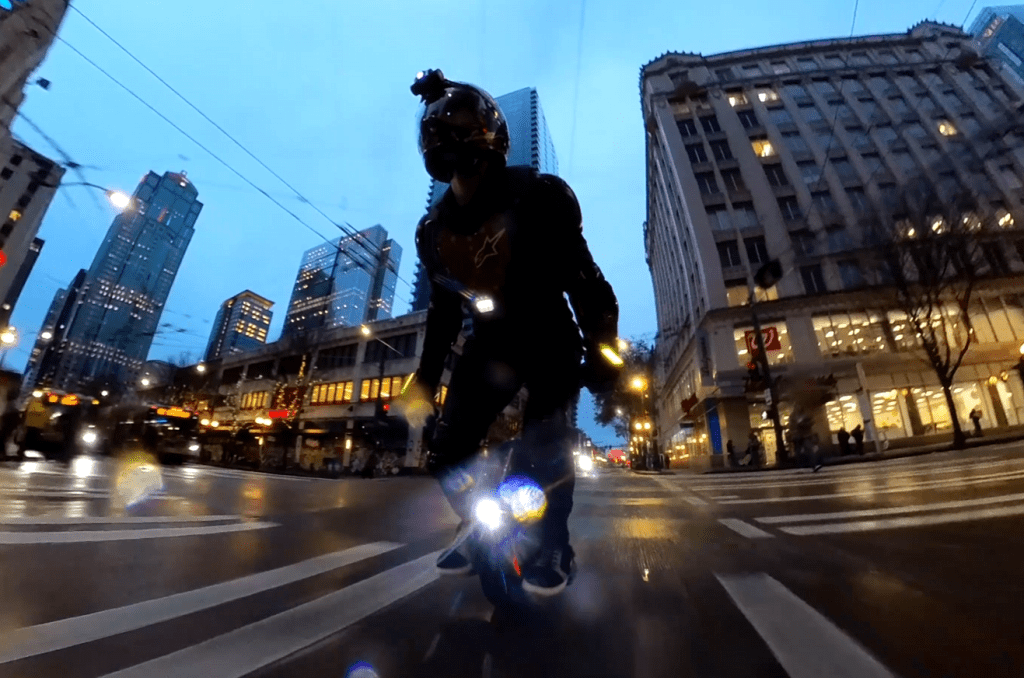
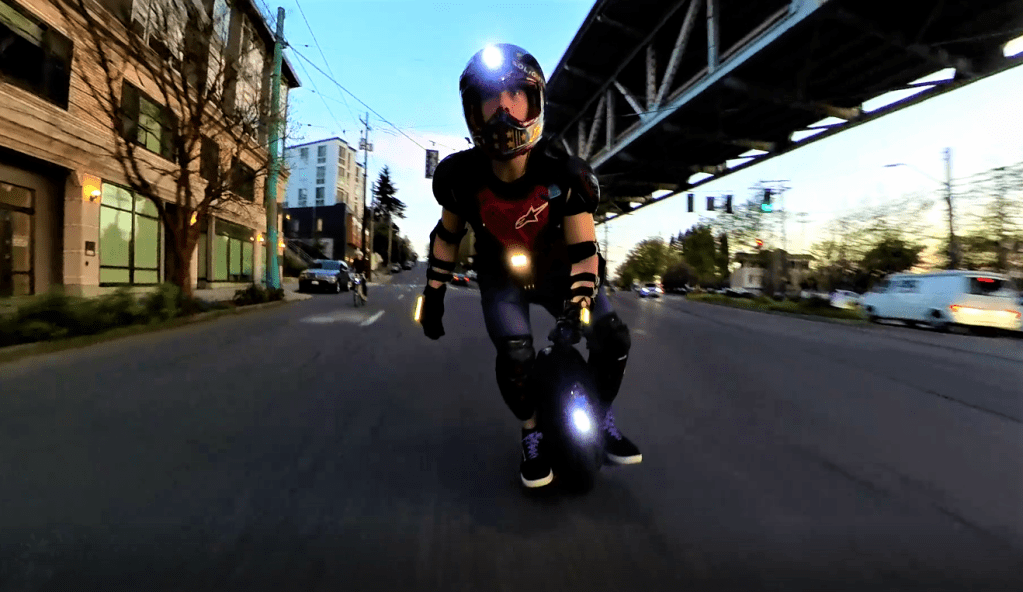
After learning how to use personal electric vehicles, I no longer walk to work.
The aspect of walking commutes that I miss most is the physical benefit of walking. Also perhaps the mental benefits so I may walk recreationally even though it isn’t to the extent that I used to walk daily.
However, now that I can travel so efficiently on my EUC, I have been granted more time.
If you have read this far, then I’ll let you in on a little secret that this is where I got my Electric Unicycle and it’s an ad because the customer service is top: eWheels.com.
 Seattle Electric Unicycle Rider
Leave a comment